You sell eight cold-pressed juices at $6 a bottle.
It’s July, and most orders are a single bottle of whatever sits on your homepage.
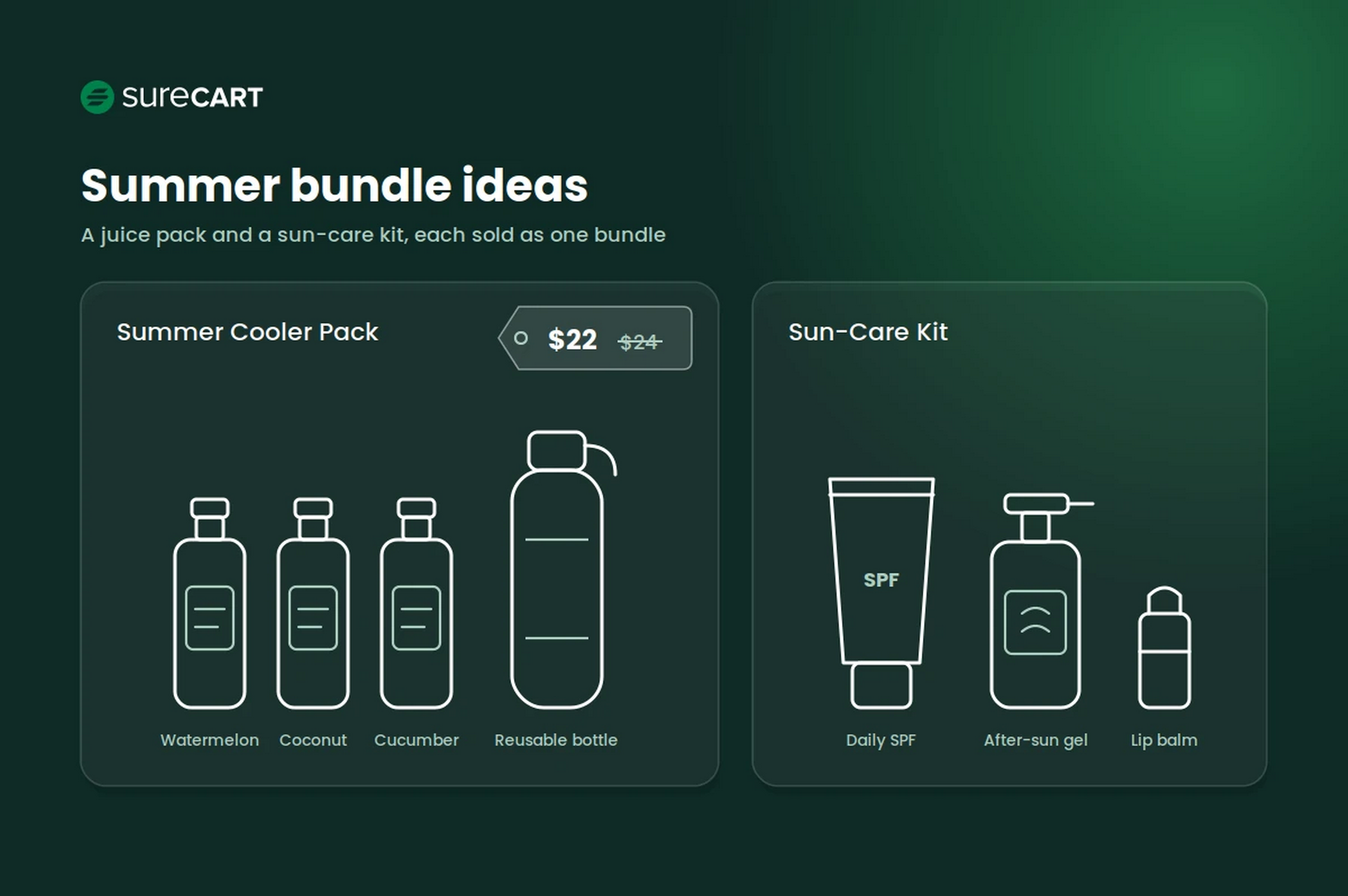
Now change one thing. Take your three most summery flavors (watermelon-mint, coconut-lime, and cucumber-ginger) and add a reusable bottle.
Sell the set as a Summer Cooler Pack for $22, with $24 shown as the compare-at price. The bottle is the only new item; everything else is stock you already carry. (These numbers are an illustration, not a benchmark.)
Vendor-published case studies show similar results. Henson Shaving, a razor brand with a small catalog, reported a 21% increase in average order value during Q4 after launching two named holiday bundles with a light incentive of about 8%, and AOV stayed 10% higher in the following months, according to a Simple Bundles case study.
In another Simple Bundles case study, kids’ clothing brand West Rock Apparel reports that bundles account for 20% of its orders and are associated with a 26% increase in average order value.
That’s what seasonal product bundles do: you group products you already sell around a moment customers are already thinking about, name the set for that moment, and sell it for a limited window.
Below are 24 seasonal bundle ideas: 21 across seven seasonal moments (summer, monsoon, back-to-school, fall, the festive season, winter, and New Year and spring), plus three seasonal subscription box ideas. Each one starts from a business type, so you can jump straight to what you sell.
If you’re after bundle types beyond seasonal ones, like starter kits or clearance bundles, our guide to 15 product bundling examples covers those.
Quick answer: To create seasonal product bundles, pick a season that fits what you sell, pair one hero product customers already buy then with two to four complements, give the set a seasonal name and a visible saving, and retire it when the season ends.
Key Takeaways
- Your seasons come from what you sell, not from the calendar. A juice brand might peak in summer, while a candle brand might peak in winter.
- Three to five products is a useful starting point. Two can work when both solve one clear problem; bigger bundles need tighter organization.
- A seasonal bundle is a one-time purchase; a seasonal subscription box recurs, with a new product mix you plan for each season.
What is a seasonal product bundle?
A seasonal product bundle is a set of two or more products, usually from your existing catalog, grouped around a season, holiday, or occasion and sold as a single offer for a limited time. For example, a skincare store might combine SPF, after-sun gel, and an SPF lip balm into a Summer Sun-Care Kit.
You’ll see two formats in this guide:
- Seasonal bundles are one-time purchases. A shopper buys the Winter Loungewear Set once and that’s the order.
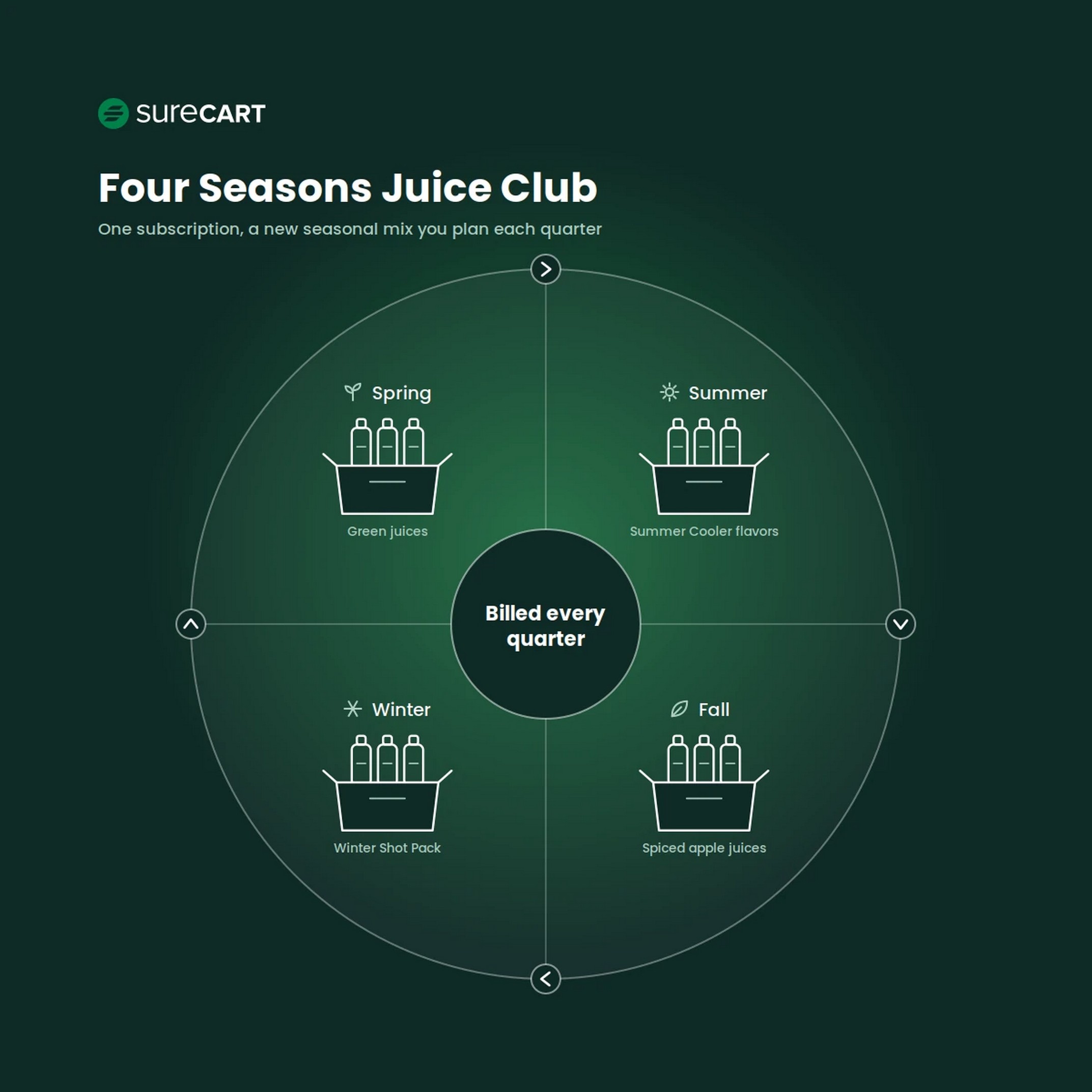
- Seasonal subscription boxes recur. The shopper subscribes once and is billed on a set schedule, such as every three months, and you plan a new product mix for each seasonal shipment.
How to choose the right seasons for your product bundles
Not every season suits every store. Before you build anything, look at when your customers already buy more, and what they’re buying for. Skip the seasons where your products feel forced.
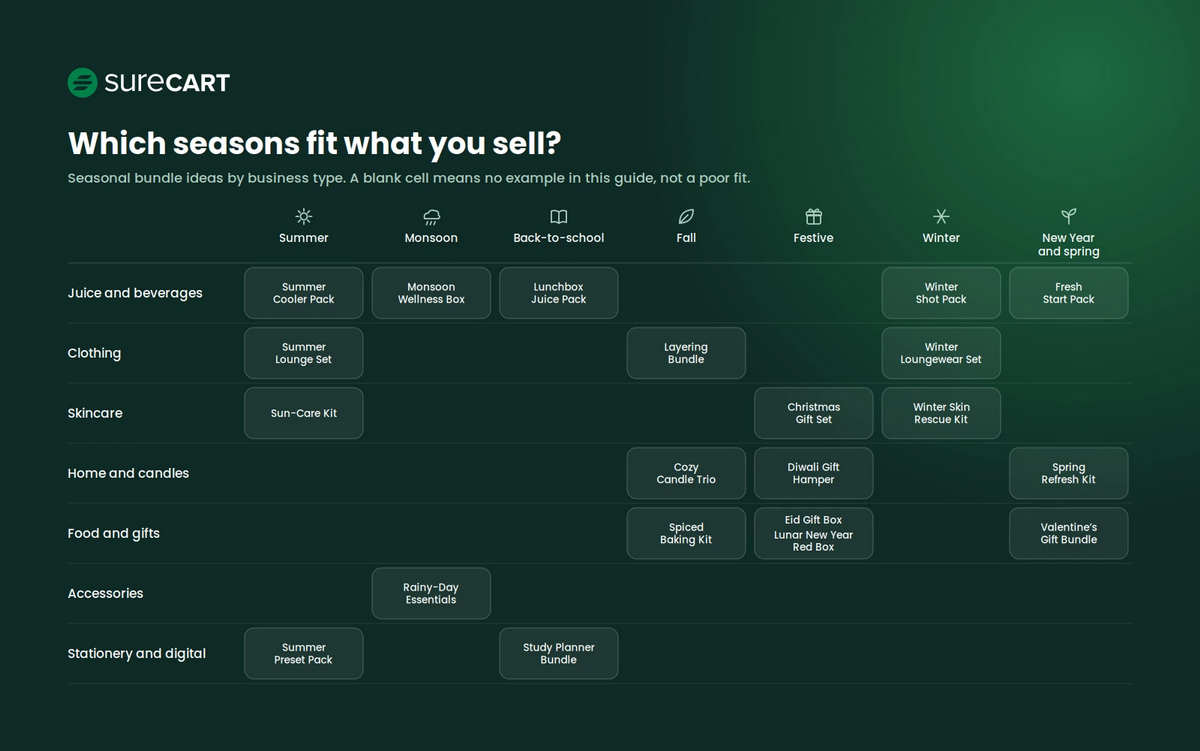
Here’s a quick map of which seasons tend to suit which kinds of stores. A blank cell only means this guide doesn’t include an example for that pairing, not that the season can’t work for you.
Selling in the Southern Hemisphere? Flip summer and winter. A December summer bundle in Sydney makes as much sense as a July one in Chicago.
Summer bundle examples
Summer bundles can work especially well when they help shoppers cool down or enjoy time outside. Bundles that answer one of those needs have a clear seasonal use case.
1. Summer Cooler Pack (juice brand)
What’s inside: watermelon-mint, coconut-lime, and cucumber-ginger juices, plus a reusable insulated bottle.
This is the bundle from the intro. The three flavors read as “hot day” without any explanation, and the bottle turns a drink order into something the customer keeps using all season.
Tip: let shoppers pick a flavor variant for one of the three slots so the pack feels less fixed.
2. Summer Lounge Set (clothing brand)
What’s inside: a linen shirt, drawstring shorts, and a canvas tote.
A lounge set solves a real summer problem: what to wear when it’s too hot to think about outfits. Selling the pieces together means the colors already match, so the customer doesn’t have to work it out.
Tip: offer size as a variant on each piece so shoppers can pick top and bottom sizes separately.
3. Sun-Care Kit (skincare brand)
What’s inside: a daily SPF, an after-sun gel, and a tinted lip balm with SPF.
For shoppers buying sunscreen, after-sun care is easy to forget until they’ve had too much sun. A kit that covers before, during, and after sun exposure is easier to say yes to than three separate decisions.
Tip: add a travel-size SPF as a fourth item for a vacation version of the same kit.
4. Summer Preset Pack (digital creator)
What’s inside: a set of bright, warm photo presets, a pack of summer caption templates, and a short guide to shooting in harsh midday light.
Seasonal bundles aren’t only for physical products. Summer travel and outdoor shoots make a themed digital pack timely, and it costs almost nothing extra to fulfill.
Tip: retire it in September and replace it with a fall pack built from the same template.
Monsoon and rainy-season bundles
If you sell in South Asia, Southeast Asia, or anywhere with a long wet season, the rains are a season in their own right. Many bundle guides skip it, which can mean less competition for your offer.
5. Monsoon Wellness Box (tea or juice brand)
What’s inside: a ginger-tulsi tea blend, a turmeric ginger shot, a jar of raw honey, and a pack of dried ginger candy.
Warming drinks and comfort products can be a natural fit for the monsoon months. Four small items built around tea, ginger, and honey give the box an easy, recognizable theme.
Tip: price it so the honey and candy feel like the bonus, since tea and shots are what most customers came for.
6. Rainy-Day Essentials (accessories store)
What’s inside: a compact umbrella and a waterproof phone pouch.
Two items is enough when both solve the same problem. A commuter buying an umbrella may also be worried about their phone in a downpour.
Tip: sell a second version with quick-dry socks added for customers who walk or ride to work.
Back-to-school bundles
Back-to-school is a stock-up moment, so bundles that save shoppers a few trips are especially convenient.
7. Lunchbox Juice Pack (juice brand)
What’s inside: twelve kid-size bottles across four flavors.
The same juice brand from our summer example has a second seasonal moment here. A mixed case gives families variety without buying four separate packs.
Tip: keep the sugar content easy to find on the bundle page, since it’s an important consideration for many parents.
8. Study Planner Bundle (stationery or digital seller)
What’s inside: a dated academic planner, two sticker sheets, a pack of index tabs, a set of highlighters, and a printable weekly timetable.
Students and parents often shop for these supplies before the academic year begins. Putting them in one bundle saves shoppers from building the list themselves. Digital sellers can run a version with only the printables, delivered as downloads.
Tip: name it after the school year (“2026 to 2027 Study Kit”) so it reads as current.
Fall and autumn bundles
Fall is a reset. Routines restart and shoppers start buying for comfort before the holiday rush.
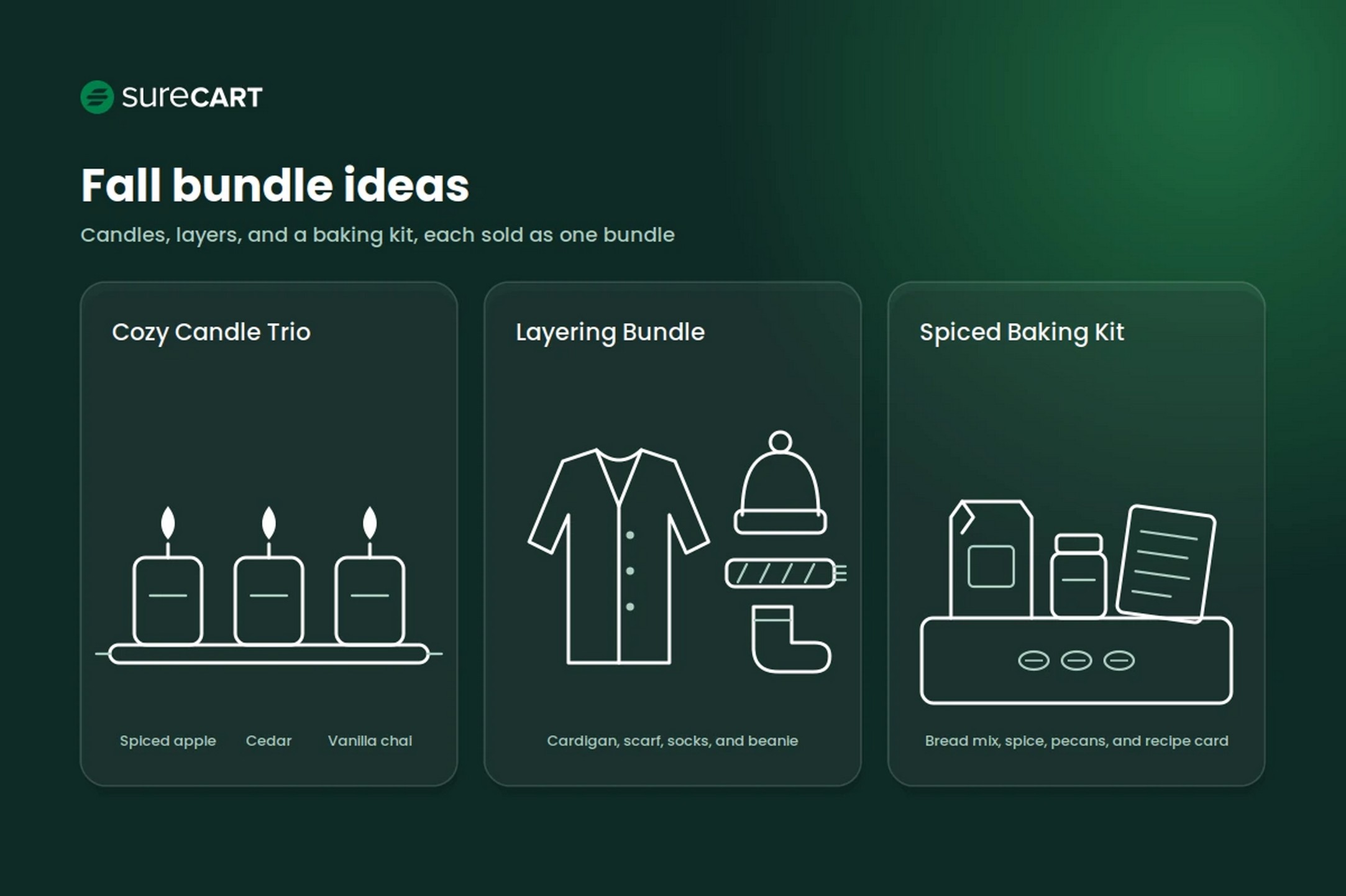
9. Cozy Candle Trio (home fragrance brand)
What’s inside: three candles in fall scents, such as spiced apple, cedar, and vanilla chai.
Three scents give a buyer one for each room. A trio is also an easy early gift, bought in October and handed over in December.
Tip: give each scent a short, evocative name on the bundle page so the three jars read as one collection.
10. Spiced Baking Kit (food brand)
What’s inside: a pumpkin bread mix, a jar of baking spice, a bag of pecans, maple sugar, and a recipe card.
What you’re really selling is a weekend afternoon of baking. Everything someone needs for one bake arrives in a single box, which suits people who like the idea of baking more than the shopping list.
Tip: list the bake time and serving count right under the bundle name.
11. Layering Bundle (clothing brand)
What’s inside: a knit cardigan, a lightweight scarf, a pair of wool socks, and a beanie.
In many places, fall weather swings from chilly mornings to warm afternoons, and layers help people handle both. Pieces that go together in color and texture make the bundle a ready-made outfit for the in-between weeks.
Tip: photograph the set worn together, not laid flat, so shoppers see how it layers.
Festive and holiday bundles
Major festivals and holidays create strong gifting moments, and gift buyers rarely want to assemble a gift from five product pages. A ready-made bundle at a clear price point can make the choice easier.
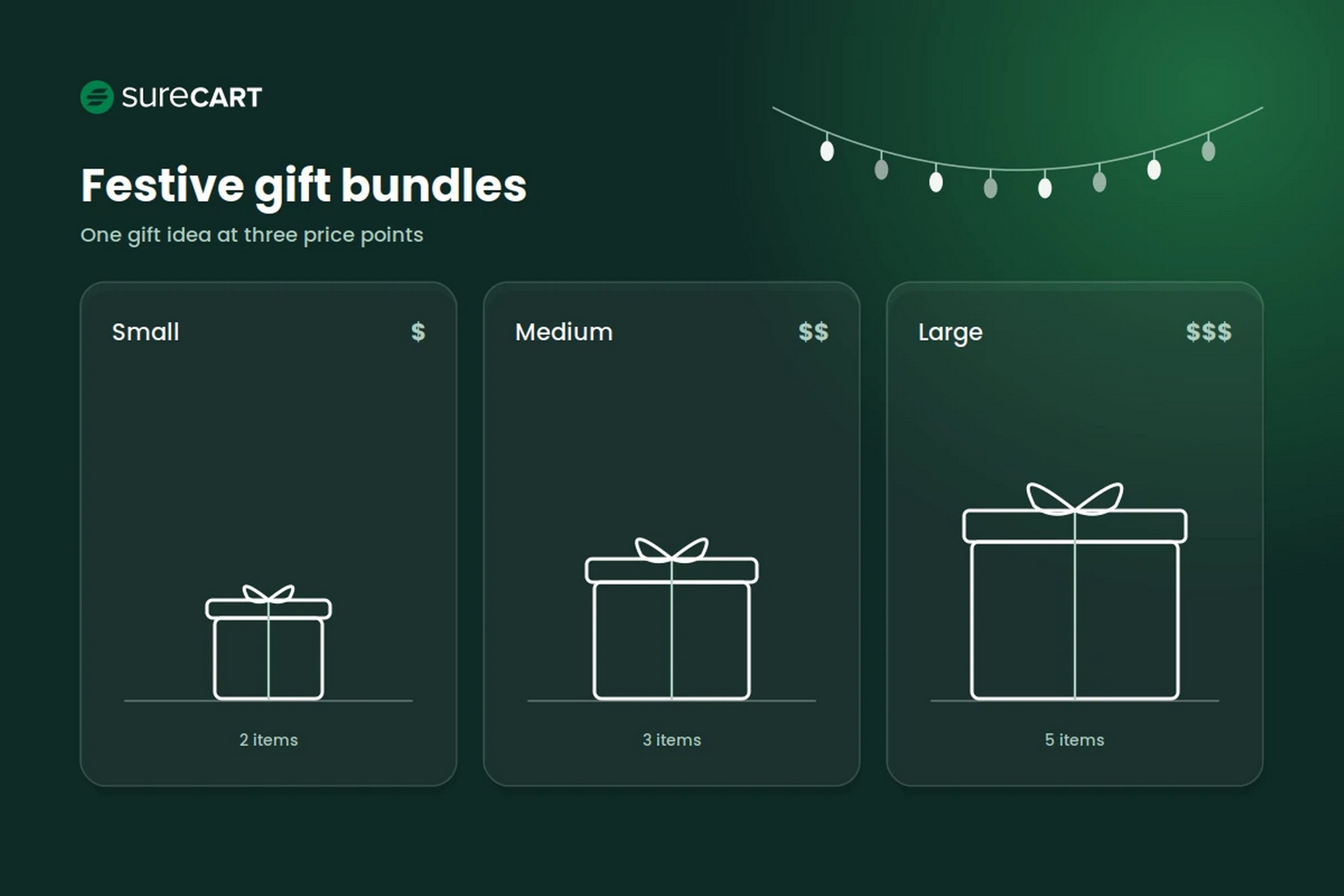
The Indian incense brand Phool shows how this looks in practice. Its Diwali Collection 2026 groups incense, candles, diyas, and festive treats into named gift boxes at several price points. Staples like incense and diyas appear in many of the boxes, while the number of items and the price change from box to box.
12. Diwali Gift Hamper (home or sweets brand)
What’s inside: a box of mithai, a pair of decorative diyas, and a scented candle.
Diwali gifting is often done in bulk, for relatives, neighbors, and colleagues. A hamper with a fixed price makes it easy to order ten at once.
Tip: like Phool, offer the same idea at two or three price points so shoppers can match the gift to the relationship.
13. Eid Gift Box (food or fragrance brand)
What’s inside: premium dates, a small bottle of attar, a box of sweets, and a greeting card.
Eid gifts are about sharing and hospitality, so food and fragrance fit naturally. A box that arrives ready to hand over saves the giver a lot of last-minute shopping.
Tip: launch it before Ramadan ends, so it’s available while people are planning their Eid gifts.
14. Christmas Gift Set at three price tiers (skincare or beauty brand)
What’s inside: a hand cream and lip balm at the entry tier; add a body wash at the middle tier; add a candle and a gift bag at the top tier.
For gift buyers working within a budget, three tiers built from the same product line help them find their number fast, and the top tier gives anyone who wants to spend more an easy option.
Tip: keep the packaging identical across tiers so even the smallest set looks like a proper gift.
15. Lunar New Year Red Box (food or tea brand)
What’s inside: a tin of loose-leaf tea, a box of pineapple tarts or candied fruit, and red envelopes.
Red and gold packaging, sweets for a sweet year, and envelopes ready to fill: everything in the box connects to a familiar tradition.
Tip: have someone who celebrates the holiday check your product names and colors before you launch, so the box reads as respectful rather than generic.
Winter bundle examples
Winter bundles often work well when they focus on comfort, warmth, or seasonal self-care.
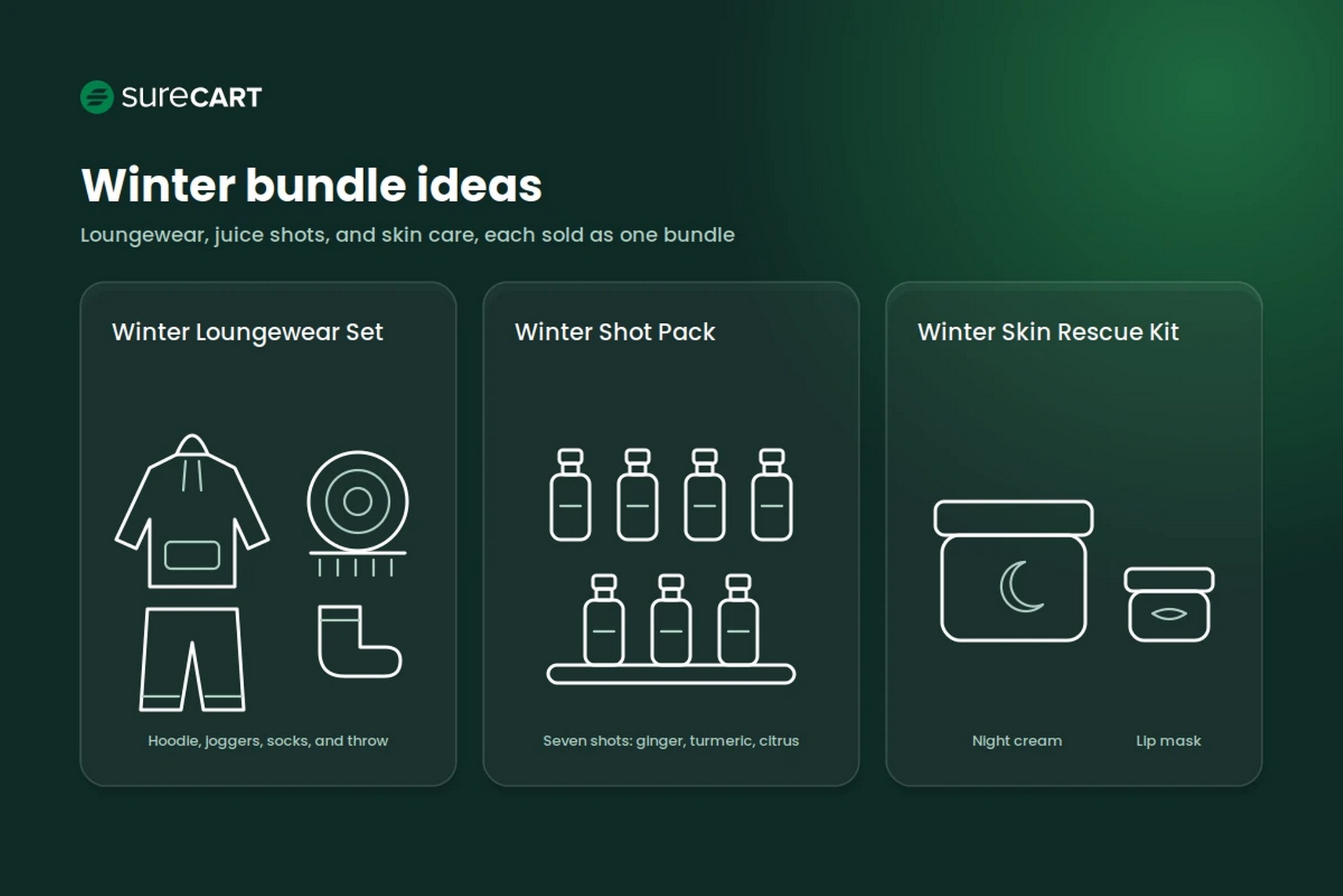
16. Winter Loungewear Set (clothing brand)
What’s inside: a fleece hoodie, matching joggers, a pair of thick socks, and a knit throw blanket.
This is the winter twin of the Summer Lounge Set, from the same brand, built for the opposite season. It works as a self-purchase for a long weekend at home and as a gift that doesn’t need sizing guesswork if you include the blanket.
Tip: sell the hoodie and joggers as a two-piece version too, for shoppers who already own a throw.
17. Winter Shot Pack (juice brand)
What’s inside: a seven-day pack of ginger, turmeric, and citrus-based shots.
Here’s the juice brand again. If you’re looking for a more winter-focused offer, small, punchy ginger, turmeric, and citrus drinks give you a winter-themed alternative.
Tip: call it a weekly pack and show the per-day price, which makes the total feel smaller.
18. Winter Skin Rescue Kit (skincare brand)
What’s inside: a rich night cream and an overnight lip mask.
Cold air and indoor heating can leave skin dry, and two targeted products cover the basics. A short list also keeps the price friendly for an impulse buy.
Tip: add a hand cream as a third item in December to turn it into a stocking stuffer.
New Year and spring bundles
The start of the year is about fresh starts, and spring is about renewal. Both give you a reason to sell routines and resets.
19. Fresh Start Pack (juice brand)
What’s inside: a three-day set of green juices, a citrus-ginger blend, and a printed habit tracker.
January is a common time to start new routines, so a pack framed around the first week of a habit can land better than a plain discount. The tracker costs pennies and gives the bundle a reason to exist beyond the juice.
Tip: name it after the outcome (“First Week Reset”) instead of the ingredients.
20. Valentine’s Gift Bundle (any gift-friendly brand)
What’s inside: two matching mugs, a bag of specialty hot chocolate, a box of chocolate-covered almonds, a card, and gift wrap.
A ready-made Valentine’s gift can feel personal without requiring much effort from the buyer. A paired gift (two mugs, one for each person) makes the bundle feel made for a couple.
Tip: promote it two weeks out, then again three days before the holiday to catch last-minute shoppers.
21. Spring Refresh Kit (home or garden brand)
What’s inside: a set of herb seed packets, a small planter, and organic potting mix.
Spring is a natural time to start a small project at home. A beginner-friendly growing kit gives shoppers an easy first project and a reason to come back for refills and bigger planters later.
Tip: include a one-page growing guide, which cuts down on support questions from first-time growers.
Seasonal subscription boxes
A seasonal subscription box repeats the bundle idea on a recurring schedule, with a new mix you plan before each renewal.
FabFitFun is a well-known example of the format. Its Seasonal plan bills quarterly, and each season members choose six full-size products for their box. You don’t need a catalog that size to run the same model. A small store with a dozen products can rotate three or four of them per season.
22. Four Seasons Juice Club (juice brand)
What’s inside: a seasonal case you plan for each quarter, such as the Summer Cooler flavors in summer, the Winter Shot Pack in winter, and green juices in spring.
This is where the juice brand from our earlier examples ends up. Every seasonal bundle it already sells becomes one shipment in the club, so planning the box is mostly done.
Tip: offer a pause option if your subscription workflow supports it, so customers don’t have to cancel entirely. Someone who skips the ginger shots might still want the summer case.
23. Seasonal Wardrobe Box (clothing brand)
What’s inside: three or four pieces you pick each quarter to layer with the previous season’s box.
A box that builds on the last one can give customers a reason to continue across seasons. Ask for sizes once at sign-up so every box fits.
Tip: show next season’s box on your site a few weeks early so subscribers have something to look forward to.
24. Seasonal Digital Drop (digital creator)
What’s inside: a quarterly pack of templates, presets, or printables themed to the season.
A digital box skips shipping and packaging entirely, which can simplify fulfillment. The Summer Preset Pack from earlier becomes one drop, a fall pack becomes the next, and so on.
Tip: keep a back catalog so new subscribers can buy past drops individually.
How the mechanics work. Use a recurring Product Bundle with a subscription price as the billing foundation, then plan and test how you’ll update the bundle contents before each seasonal renewal. Each physical renewal creates a new order to fulfill, so build every season’s box into your fulfillment plan.
Line up renewal dates. By default, a quarterly subscription follows each customer’s own renewal schedule, so someone who joins in mid-February would renew around May, August, and November. If every subscriber should get the same seasonal box, open sign-ups in a set window before each season, or change renewal dates so they line up. Changing one renewal date also shifts every renewal after it.
Keep subscribers who want a break. You can pause a subscription from your dashboard and pick the date it resumes, and Subscription Saver can offer a discount when someone tries to cancel.
For a full setup walkthrough, see our guide to creating a subscription box on WordPress with SureCart.
How to build a seasonal product bundle in five steps
Every example above follows the same pattern. Here it is as a checklist you can reuse each season.
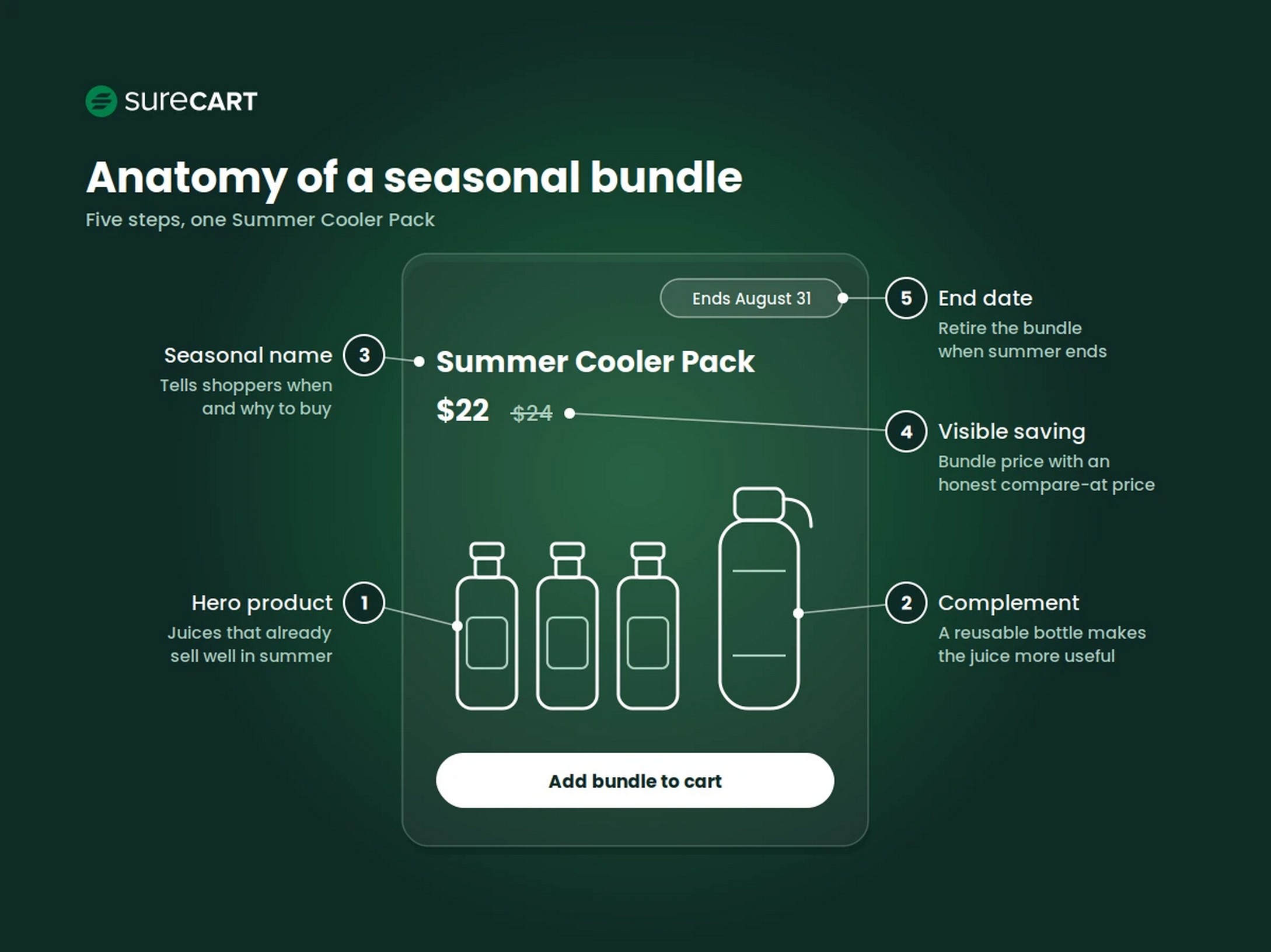
- Start with one hero product the season already sells. Check last year’s orders for that month. Whatever sold best is your anchor.
- Add two to four complements. Pick items that make the hero more useful or more giftable: the bottle for the juice, the after-sun gel for the SPF. Stop before the bundle gets hard to read at a glance.
- Name it after the moment. “Monsoon Wellness Box” or “First Week Reset” tells shoppers when and why to buy. Avoid generic names like “Value Pack.”
- Price it so the saving is visible. Set a bundle price and show the combined individual price as the compare-at price. Keep that comparison honest, since shoppers may check.
- Pick an end date before you launch. Put it on the bundle page if you want urgency, and take the bundle down when the season ends so your store doesn’t show a summer pack in November.
For more ways to raise order value beyond bundles, see our guide to increasing average order value.
Running seasonal bundles with SureCart
We built SureCart, so we’re not neutral here. But if you sell on WordPress, here’s how every idea in this guide maps to features that are already built in, with no separate bundles plugin to install.
Create the bundle
Use Product Bundles to combine products you already sell into one purchasable item with its own price and an optional compare-at price. If an included product has variants, like juice flavors or clothing sizes, shoppers pick them on the bundle page.
Schedule the seasonal promotion
Use Dynamic Pricing when you want a seasonal discount to start and end on set dates, so a festive offer switches off on schedule. Taking the bundle itself down is a quick manual step when the season ends.
Turn it into a seasonal box
Add a subscription price to make the bundle recurring, then follow the subscription box mechanics above.
Add a checkout offer
Order Bumps show an extra offer at checkout based on what’s in the cart, which suits small seasonal add-ons like a greeting card or an extra flavor.
The SureCart features used in this workflow are available on Launch, which charges a 2.9% transaction fee; Pro removes that fee (eCommerce fees). Subscriptions are built in too: SureCart manages recurring billing itself, so there’s no separate subscriptions plugin to buy, and its subscription fee replaces Stripe’s instead of adding to it.
Start Selling for Free. No credit card required.
Final thought
Start with one season and one bundle built from products you already stock, then check whether it raises order value without eating into your margin. Once your first seasonal product bundle works, next season’s version is mostly the same template with new products inside.
FAQ
What is a product bundle?
A product bundle is two or more products sold together as a single item, usually at one combined price. A seasonal product bundle is the same idea tied to a season, holiday, or occasion and sold for a limited time.
How many products should a seasonal bundle have?
Three to five products is a useful starting point for most stores, but the right number depends on how closely the products fit together. Two can be enough when both items solve the same problem, like an umbrella and a waterproof phone pouch. Past five, a bundle can get harder to understand at a glance.
When should I launch a seasonal bundle?
A useful starting window is two to four weeks before the season or holiday, and earlier for major gifting festivals. A late launch can miss shoppers who plan ahead.
Should seasonal bundles be discounted?
Not always. A good name and a convenient set of products can sell at close to full price. If you do discount, show the savings clearly and keep the comparison honest.
What’s the difference between a seasonal bundle and a seasonal subscription box?
A seasonal bundle is a one-time purchase. A seasonal subscription box recurs: the customer is billed on a set schedule, often every three months, and you plan a new product mix for each seasonal shipment.