If your store gets 300 orders a month at an average of $60 per order, that is $18,000 in monthly revenue. Now imagine the average order value climbs to $80, with the same number of orders and the same amount of traffic. That is $24,000 per month. The extra $6,000 came from buyers who were already choosing you.
Most store owners chasing more revenue go straight to traffic: more ads, more content, and more outreach. But average order value is a lever that works on every single order placed, without acquisition cost. It is one of the most underused revenue drivers in ecommerce, and this post covers how to move it without spending more on traffic.
What Average Order Value Actually Means (and Why It’s Your Best Growth Lever)
The Formula: 30 Seconds to Know Your Number
Average order value is calculated by dividing total revenue by the number of orders placed over the same period:
Average Order Value = Total Revenue ÷ Total Number of Orders
If your store generated $12,000 from 200 orders last month, your AOV is $60.
Once you know your number, the next question is a practical one: what would a $10 or $15 increase per order mean for your monthly revenue? At 200 orders, that is $2,000 to $3,000 more from the same traffic, the same products, and the same conversion rate. That gap is what this post is about.
If you’re working with large ecommerce datasets, an LLM for data analysis can also help uncover purchasing patterns, identify high-value customer segments, and surface cross-sell or bundle opportunities that may increase your average order value.
Why Chasing Traffic Is the Hard Path
Every new visitor your store acquires costs something, either money (paid ads) or time (content, SEO, and outreach). That cost has been rising consistently. The customer who already clicked “buy” has already been acquired. Getting them to spend a little more costs a fraction of what it took to get them there in the first place.
This is not an argument against traffic. It is an argument for running both levers at once. Most stores work hard on acquisition and barely touch AOV. The gap between what they currently earn per order and what they could earn is often significant. Most of the tactics to bridge it can be set up in under an hour.
Before You Add Tactics, Think Like an Offer Designer, Not a Discount Merchant
Most store owners reach for a discount when they want buyers to spend more. A 10% off coupon, a flash sale, a limited-time promotion. The problem is that discounts communicate that your product is worth less than you originally asked. Run them often enough and buyers learn to wait for the next one.
There is a more durable approach, and it starts with one distinction: the difference between a product and an offer.
A product is a thing with a price. An offer is a product plus a reason to buy now, at this price, without hesitation. The same digital template sold for $37 on its own is a product. Sold as a complete starter kit with a bonus resource document, a quick-start checklist, and a 14-day satisfaction guarantee at $47 is an offer. The seller’s cost difference between the two is close to nothing. The buyer, however, sees one as clearly worth more than the other and will pay accordingly.
Alex Hormozi’s core argument in $100M Offers applies directly to ecommerce AOV: when you stack genuine value on top of your core product at low cost to you, the price feels smaller relative to what the buyer is getting. That is the opposite of discounting. Discounting makes the product feel less valuable. Value stacking makes the price feel obviously reasonable.
Three levers worth applying to your store:
- Value stacking. Add a bonus that solves a problem adjacent to the main product. For a course creator: a template the student would need anyway. For a physical product seller: a usage guide, a complementary accessory, a care kit. The bonus has to feel actually useful, not like filler included to justify a higher price.
- Risk reversal. A clear, confident return policy or satisfaction guarantee removes the hesitation that keeps buyers from choosing the higher-priced option. When the perceived downside feels small, buyers are more willing to commit to more.
- The gap between tiers. If you have a basic and a premium version, the premium should feel like an obviously better deal, not just a more expensive one. The goal is for buyers to look at both options and think: why would I choose the cheaper one?
Pro Tip: Before reaching for a discount to lift a stalled product, ask what you could add to the offer at low cost. A PDF companion, a recorded walkthrough, early access to the next version. Something that takes you an hour but feels substantial to the buyer.
6 ways to increase AOV for your store
Tactics That Work Before the Checkout
Bundling: The Simplest Way to Make $67 Feel Like $45
A bundle groups two or more products into a single package, priced below what the individual items would cost bought separately. The buyer perceives more value for less money. You get a single transaction worth more than a typical single-product purchase.
The key is that the bundle should solve a complete problem, not just group products arbitrarily. “Buy my design templates” is a product list. “The complete social media starter kit: templates, caption swipe file, and posting calendar” is a bundle that solves the entire workflow. The customer can see exactly what they are getting and why it belongs together.
A useful pricing principle: if the individual items total $65 bought separately, price the bundle at $47. The customer saves $18. You capture $47 instead of the $27 or $19 you would have gotten from a single-item purchase.
For physical product sellers, the question is what the customer needs alongside the main product. A skincare seller might bundle the moisturizer with the toner that prepares the skin for it. The buyer needed both. Now they buy both in one transaction.
SureCart has bundling built in. You can group complementary products, apply a bundled discount, and control whether a product is available standalone or must be purchased as part of the set. No separate plugin required.
Volume and Tiered Pricing: Rewarding Commitment Without Blanket Discounts
Volume pricing works on a simple principle: the more a buyer commits to, the better the rate they get. Buy one for $20. Buy three for $50. Buy five for $75. A buyer who planned to purchase one product now reconsiders buying three because the per-unit math makes it feel smart.
This approach works best for consumables, templates sold in packs, digital assets available in multiple variations, or physical products with natural repeat-purchase behavior.
This works differently from a store-wide sale. When you discount everything, you take a margin hit across the entire catalog and train buyers to wait for the next deal. A cart-total rule only activates when the buyer does something specific, and your regular prices stay exactly where they are.
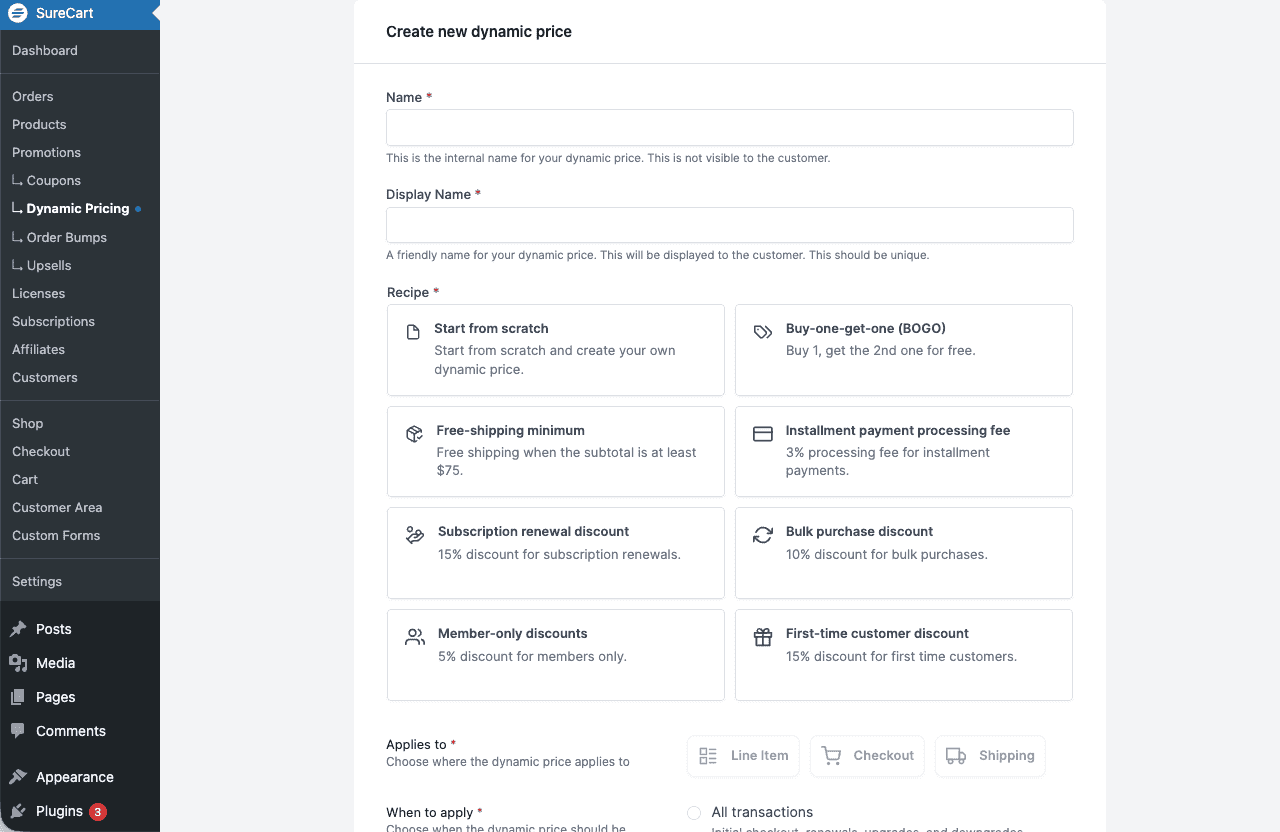
SureCart’s Dynamic Pricing uses an IF→THEN rule builder. You set the condition (“if cart total exceeds $80”) and the result (“apply 12% off”). It runs automatically at checkout on every order, with no manual intervention, no coupon code required, and no campaign to launch and take down.
Subscriptions as the Ultimate AOV Upgrade
A customer who buys your course once at $39 adds $39 to your revenue. A customer who chooses your annual plan at $97 adds $97 in that single transaction, and renews each year. That gap between the one-time price and the subscription commitment is one of the most direct AOV opportunities available for any business where ongoing access, recurring delivery, or replenishment makes sense.
When you present subscriptions alongside one-time options, customers who choose the subscription tier typically commit to more value upfront. An annual plan at $97 versus a one-time purchase at $29 drives a higher transaction value immediately. The recurring revenue that follows is the LTV benefit. The higher upfront commitment is the AOV benefit.
The framing matters here. “Subscribe and save” is vague and overused. A clearer pitch: “Buy once for $49, or get the annual plan at $97 and receive all future updates plus priority support.” The buyer can see exactly what the subscription adds and why the upfront commitment is worth it.
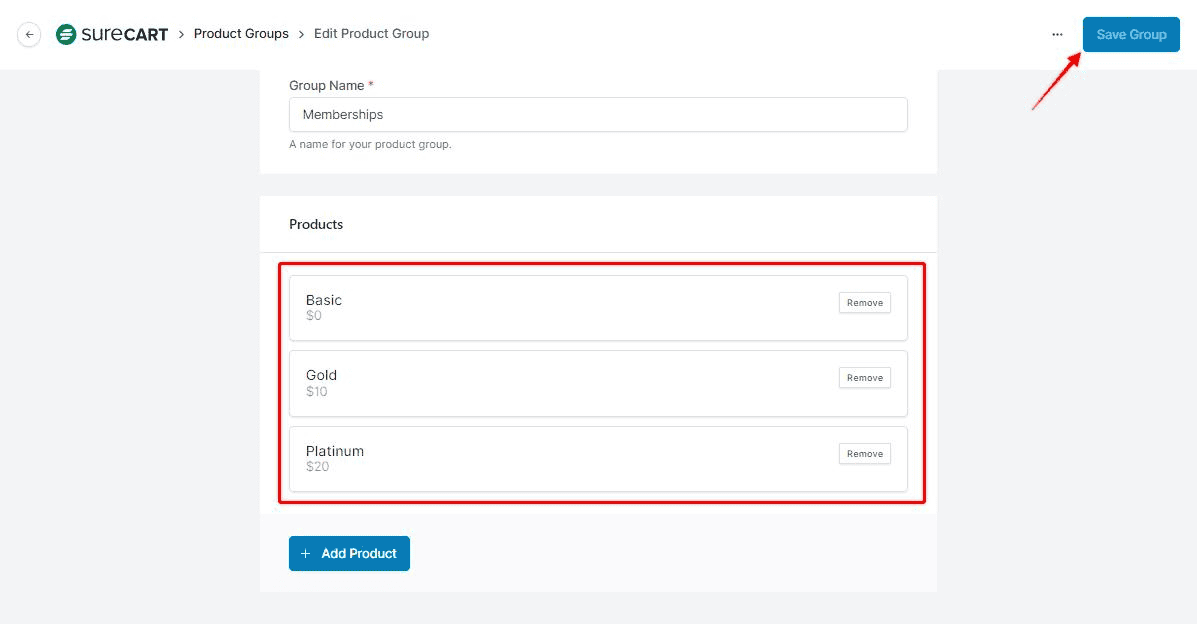
SureCart has full subscription management built in: recurring billing, plan tiers, upgrade and downgrade paths, and a customer self-service portal where subscribers manage their own accounts without contacting you. The Upgrade Groups feature lets you structure plan tiers (basic, pro, business) so buyers can move between them cleanly.
Tactics That Work at the Checkout
Order Bumps: The Add-On That Doesn’t Interrupt the Purchase
An order bump is a small additional offer shown inside the checkout form, typically just above the payment button. The customer adds it with a single checkbox tick. No redirect, no new page, no disruption to the purchase flow they are already in.
The psychology is direct: the buyer has already made the decision to purchase. The mental barrier is crossed. A small, relevant addition at a low price, presented at the exact moment the wallet is open, catches people at the highest-intent moment in the entire customer journey.
A few examples across different store types:
A course creator sells a $37 productivity template. Order bump: a bonus swipe file of 10 pre-filled examples for $9.
A skincare brand sells a $45 moisturizer kit. Order bump: a travel-size version of the hero product for $8.
A WordPress agency charges $299 for a site setup package. Order bump: a 30-minute recorded site walkthrough for the client at $29.
In each case, the bump is priced at roughly 10 to 30% of the main offer and solves a problem adjacent to the main purchase. The goal is a yes so easy it barely feels like a decision.
SureCart includes order bumps on every plan. You can set display conditions so each buyer sees an add-on relevant to what they are buying: for example, show a specific bump only when a particular product is in the cart.
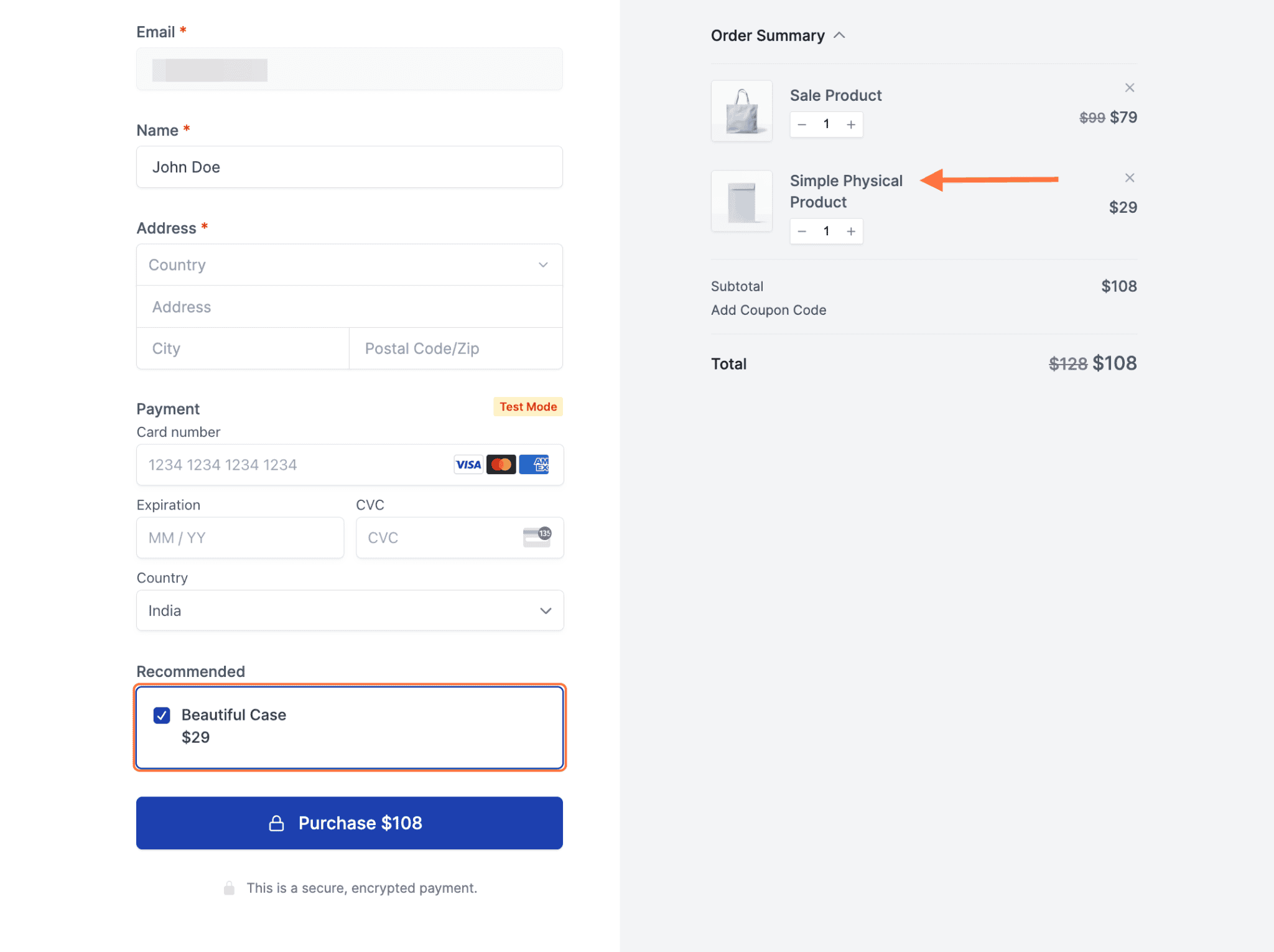
Pro Tip: The best order bump answers a question the buyer is already silently asking. If they just purchased your template pack, they are probably thinking “where do I start?” A quick-start guide makes a perfectly natural bump.
One-Click Upsells: The Yes That Happens After Checkout
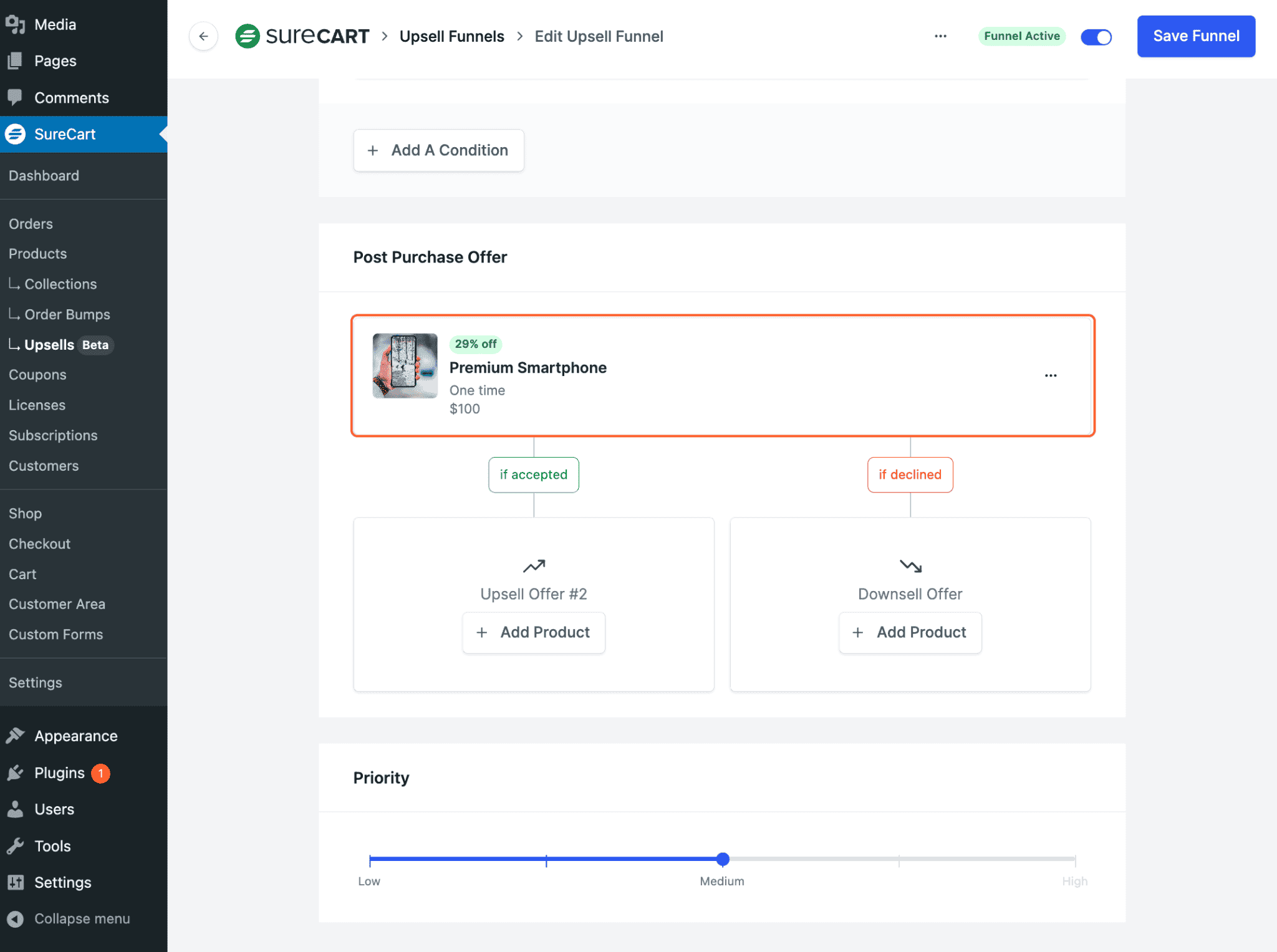
A one-click upsell is an offer shown on the thank-you page, after the customer has already completed payment. Because the card details are stored, they can accept the offer with a single click.
This works for a specific reason: the customer has just made a positive decision about your brand. There is no cart anxiety, no payment hesitation, no second-guessing. The moment right after a purchase is one of the highest-trust moments in the entire customer relationship, and most stores do nothing with it beyond confirming the order.
The upsell should be a logical upgrade or a natural next step. “Here is the advanced version of what you just bought, at a price you will not see elsewhere” works. An unrelated offer does not. The buyer should feel that the recommendation is a useful one, not an opportunistic add-on.
A few examples: A course creator upsells a live implementation session after a self-paced course purchase. A digital template seller upsells the full commercial license after a personal license purchase. A physical product brand offers a three-month supply bundle after a single-unit purchase.
SureCart’s one-click upsells are included on every plan. You can configure display conditions by product or price point and set a time-limited offer to create real urgency on the page.
Minimum Spend Thresholds: The Invisible Nudge
A spend threshold is a simple condition: reach a certain cart total and earn a reward. The reward is usually free shipping, a free item, or access to a bonus. The mechanic works because adding one more item feels like winning something rather than spending more.
A buyer with $43 in their cart, seeing “you are $7 away from free shipping,” will often add a low-cost product they were on the fence about. Around 58% of shoppers add items to their cart specifically to qualify for a free shipping threshold, because paying $7 for a product feels better than paying $7 for shipping.
For digital product sellers, free shipping is not relevant, but the mechanic translates directly. “Spend $60 and get access to the bonus template vault.” “Add two products and get a third free.” The threshold and reward differ; the behavioral nudge is identical.
One important detail: set the threshold just above your current average order value, not far above it. A threshold buyers can realistically reach in one more click works. One that requires doubling their cart does not.
In SureCart, free shipping above a set cart total is configured directly in the shipping settings. You define the minimum order amount, and it applies automatically to every qualifying order. For non-shipping rewards (a bonus item, a discount on the full cart), SureCart’s Dynamic Pricing handles those conditions using the same IF→THEN logic covered in the previous section.
After the Sale: How the Customer Relationship Affects Your Next AOV
Most stores treat the post-purchase confirmation email as the final step. The customer paid, they got a receipt, transaction complete.
The stores with the highest repeat average order values treat the confirmation as the first step in the next purchase cycle. A buyer who feels well served after the first purchase approaches the second with more trust, less hesitation, and more willingness to consider higher-priced options. That changes the AOV on future orders in a way that compounds across the customer base.
A simple post-purchase email sequence, three to five emails over two to three weeks, changes that dynamic without much ongoing effort:
Day 1: Delivery or access confirmation, plus one concrete tip on how to get the most from what they just bought. Not a pitch. A useful first step.
Day 5 to 7: A useful insight, resource, or shortcut related to what they purchased. Something that makes them feel smart for having bought from you.
Day 14 to 21: A relevant next step or natural upgrade, framed as “here is where most of our customers go next” rather than “here is another thing to buy.”
The sequence does not replace the AOV tactics above. It creates the conditions in which those tactics work better on the next visit. A buyer who trusts you accepts an order bump more readily. A buyer who got real value from the first purchase considers the premium tier next time without needing a discount to get over the line.
SureContact, also from Brainstorm Force, syncs natively with SureCart. Once you connect the two platforms and configure your tags, lists, and automation workflows, customer and order data can be synced into SureContact. There is no manual import, no middleware, and no third-party connection to maintain. You build the workflow once; it runs on every order that follows.
Pro Tip: The goal of the post-purchase email sequence is not another sale. It is to make the buyer feel smart for having bought from you. That feeling is what drives larger second orders, not coupons, not urgency, not pressure.
Design and Trust Affect What Buyers Are Willing to Spend
There is a direct psychological link between how professional a store looks and how much a customer is willing to spend per order.
A poorly designed checkout or product page creates subconscious doubt. That doubt does not just reduce conversion rates. It reduces the amount buyers are comfortable committing to. An order bump on a cluttered, visually inconsistent checkout converts poorly. The same bump on a clean, professional checkout converts at a meaningfully higher rate.
For WordPress sellers, a conversion-ready design is a prerequisite for the AOV tactics above to work at full potential. The offer can be excellent and the pricing well structured, but if the store looks unfinished, buyers will not commit at the level you are aiming for.
Astra is a performance-focused WordPress theme built by Brainstorm Force, the same team behind SureCart. It comes with Starter Templates, a library of pre-built ecommerce store designs. SureCart users get free access to the Starter Templates ecommerce collection: designs built for product pages, bundle presentations, and checkout flows that feel considered and trustworthy. It is worth having this in place before investing time in the conversion tactics above.
How SureCart Builds AOV Levers Into Every Plan
If you are running a WordPress store and want to use every tactic in this post, you would typically need a stack of separate plugins: one for order bumps, one for subscriptions, one for dynamic pricing, one for bundles, one for abandoned cart recovery. Each adds cost, complexity, and something that needs maintaining.
SureCart includes the core AOV features on every plan, without add-ons.
| SureCart Feature | What it handles | AOV tactic it covers |
|---|---|---|
| Order Bumps | Add-on offer inside the checkout form | At-checkout upsell |
| One-Click Upsells | Post-checkout offer, single click to accept | Post-purchase upgrade |
| Bundles | Group products with bundled discounts | Pre-checkout value stacking |
| Dynamic Pricing | IF→THEN rules, runs automatically at checkout | Volume pricing, spend thresholds |
| Subscriptions + Upgrade Groups | Recurring billing, plan tiers, self-serve management | Subscription upsell and plan upgrades |
| Abandoned Checkout Recovery | Automated email to buyers who did not complete purchase | Recovering revenue from incomplete orders |
| Compare-at Pricing | Displays original price alongside discounted price | Increases perceived value and savings |
| Price Boost | Offer checkout upgrades and premium purchase options | Increase order value at checkout |
| Auto Fees | Automatically apply handling, delivery, service, setup, or conditional fees | Increase order value and protect margins |
If you want to see how the plans break down: surecart.com/pricing/
Average order value is the most underused growth lever in most ecommerce stores, because it works on every order, costs nothing to acquire, and compounds as you layer tactics together. None of the strategies in this post require more traffic. If you are a WordPress store owner looking to implement order bumps, upsells, dynamic pricing, and bundling without building a plugin stack, SureCart is worth a look.