Shopify Basic costs $348 per year when you pay annually.
SureCart Pro costs $199 per year.
So SureCart is $149 cheaper.
Except that sentence is incomplete.
Shopify includes web hosting. SureCart runs on WordPress, so you still need hosting, though. Because SureCart is a headless commerce layer rather than a full hosting platform, it doesn’t need commerce-grade infrastructure and can run on ordinary, inexpensive hosting, often in the $5 to $10 a month range as a starting market estimate rather than a fixed SureCart requirement. Shopify can also charge an additional platform fee when you use a third-party payment provider.
SureCart’s free Launch plan charges 2.9% per transaction, and Launch is the only SureCart plan that charges a fee at all; Pro removes it completely, and its cost stays flat no matter how much you sell, while Shopify’s processing costs grow as your revenue does. Both platforms still have payment-processing costs on top of that. Apps, shipping, tax tools, themes, email, point of sale, setup time, and development can all affect the final number.
The real question is not:
Which pricing page shows the smaller number?
It is:
What will the complete store I actually need cost to launch and operate?
This comparison answers that question. It covers the published plan prices, transaction fees, hosting, how fast each platform actually gets you live, apps, subscriptions, digital products, physical fulfillment, international selling, point of sale, and the less obvious differences that affect cost over time. For a wider look at WordPress versus Shopify beyond pricing, see our comparison of WordPress vs Shopify: The Real Cost of Ownership.
Key Takeaways
- SureCart is usually the less expensive choice for an existing WordPress website. If hosting is already paid for, SureCart Pro adds $199 per year. Shopify Basic adds $348 per year on annual billing.
- For a brand-new website, the fixed-cost difference can be small. SureCart Pro plus $120 per year of WordPress hosting totals $319. Shopify Basic is $348 and includes hosting.
- SureCart Launch is free, but not fee-free. It adds a 2.9% SureCart platform fee to each transaction, separate from Stripe, PayPal, or another processor’s fee.
- SureCart Pro removes the SureCart platform fee. At current pricing, Pro becomes cheaper than Launch at approximately $6,862 in annual fee-bearing sales.
- Shopify does not add its third-party transaction fee when you use Shopify Payments. If you use another provider, Shopify currently adds 2% on Basic, 1% on Grow, or 0.6% on Advanced, on top of the provider’s own charges.
- Shopify is the stronger operational package for physical retail, POS, multichannel selling, and merchants who want no WordPress responsibility. That can be worth more than the license-price difference.
- SureCart is especially competitive for WordPress-based digital products, software licensing, subscriptions, services, memberships, and mixed catalogs. More of the revenue toolset is included in one system.
- SureCart’s headless architecture keeps hosting requirements low. Checkout, payments, and subscriptions run on SureCart’s own managed infrastructure rather than through your WordPress host, so you don’t need commerce-grade hosting to run a full store, and Launch lets you start at $0 in platform cost.
The Quick Answer
| Your situation | Likely better fit | Why |
| You already have a WordPress website or want to start a new WordPress store | SureCart | Existing hosting becomes a sunk cost, so the incremental platform price is lower |
| You sell digital products, software, subscriptions, courses, physical products, or services and need a reliable cost structure | SureCart | Digital delivery, licensing, recurring billing, order bumps, upsells, and retention tools are part of the platform |
| You want a new store without managing WordPress | Shopify | Hosting, infrastructure, security, storefront, and commerce admin are packaged together |
| You sell physical products online and want a low-cost way to validate ecommerce without requiring POS | SureCart | SureCart’s launch plan is designed for exactly this purpose, where you build, grow, and then you decide if you want to upgrade |
| You need a very large app and integration ecosystem | Shopify | Shopify App Ecosystem is mature |
| Shopify Payments is unavailable or unsuitable in your country | Compare carefully | Shopify’s third-party transaction fee can materially change the economics |
| You want to pay once instead of indefinitely | SureCart | SureCart currently offers a $699 one-store lifetime option |
| You need complex international retail operations | Shopify | Markets, local currencies, sales channels, duties, and international tooling are more developed, although some carry additional fees |
Pricing Scope and Assumptions
The comparison uses one store, annual billing where available, and US list pricing. Shopify pricing and payment rates vary by country. Payment processor fees vary by country, card type, currency, and payment method.
The cost examples exclude:
- Product costs
- Postage and carrier charges
- Advertising
- Custom development
- Tax remittance
- Chargebacks and refunds
- Discounts or temporary promotions
Where a calculation uses Stripe or Shopify Payments, it uses the published US standard online card rate as an illustration. Your actual rate may be different.
SureCart and Shopify Base Pricing
SureCart Pricing
SureCart’s current pricing for one store is:
| SureCart plan | Platform price | SureCart platform transaction fee | Hosting included? | Main use |
| Launch | $0 | 2.9% | No | Testing an offer or starting with low sales |
| Pro, annual | $199/year | 0% | No | An active store that wants predictable platform cost |
| Pro, lifetime | $699 one-time | 0% | No | A store expected to remain on SureCart for several years |
SureCart says its Launch plan provides access to its 100+ features rather than using feature gates to force an immediate upgrade. The tradeoff is the 2.9% platform fee.
WordPress hosting, a domain, and any premium theme, builder, or external service remain separate costs.
Shopify Pricing
Shopify’s current US pricing is:
| Shopify plan | Annual billing rate | Effective annual cost | Monthly-billing rate | Effective annual cost | Hosting included? |
| Basic | $29/month | $348/year | $39/month | $468/year | Yes |
| Grow | $79/month | $948/year | $105/month | $1,260/year | Yes |
| Advanced | $299/month | $3,588/year | $399/month | $4,788/year | Yes |
| Plus | From $2,300/month on a 3-year term (or $2,500/month on a 1-year term) | Custom | Custom | Custom | Yes |
Shopify includes unlimited web hosting, SSL, the hosted checkout, infrastructure, and the core online-store system. A custom domain, premium theme, paid apps, POS Pro, and usage-based services remain separate.
Two costs are easy to underestimate here. Many of the more polished, conversion-focused themes on Shopify’s Theme Store are paid. Premium themes commonly cost hundreds of dollars as a one-time purchase, since the free themes are comparatively basic. And features like upsell funnels, advanced order bumps, and post-purchase offers are usually paid apps or gated to a higher plan rather than included on Basic, so matching a fuller feature set often means paying for a theme and a stack of apps on top of the plan price.
That is the first major difference:
| Cost layer | SureCart | Shopify |
| Commerce software | Free with fee, $199/year, or $699 lifetime | Recurring Shopify subscription and transaction fee |
| Website platform | WordPress | Shopify |
| Hosting | Purchased separately | Included |
| Commerce infrastructure | SureCart’s managed cloud layer | Included |
| Storefront maintenance | You or your WordPress host manages the site layer | Shopify manages the hosted platform |
Why SureCart’s Hosting Requirements Start Lower
SureCart is headless commerce: the checkout, payment processing, subscription logic, and order management run on SureCart’s own managed cloud, not on your WordPress server. Your WordPress hosting serves the storefront pages, product and content pages, themes, plugins, and API calls rather than processing checkout and orders directly, a lighter commerce load than a fully self-hosted setup carries, though hosting needs can still grow as your traffic, media, and catalog grow, just as they would for any WordPress site.
That is different from Shopify, where the plan price also buys the infrastructure running the store itself, and different from a fully self-hosted WordPress commerce plugin, which puts checkout and order processing load directly on your hosting account. In practice, a SureCart store can often run comfortably on standard, inexpensive WordPress hosting rather than a premium commerce-tier plan, and it is part of why Launch can be offered at $0 in platform fees: SureCart’s own infrastructure costs are separate from what it charges you.
This doesn’t make hosting free, and hosting needs can still grow as your traffic, media library, and catalog grow. What stays lighter is the commerce load itself: your hosting isn’t also absorbing checkout and order processing the way a self-hosted setup’s would.
How Fast Can You Actually Launch?
Cost is only half the story. For a small business deciding whether to build an online store at all, how quickly you can get from nothing to a working store matters just as much, and it’s a place where SureCart is closer to a Shopify-style experience than WordPress’s reputation suggests.
Getting a SureCart store running doesn’t require the plugin-stacking, settings-hunting process people associate with WooCommerce. The path looks more like this: choose a WordPress host, install WordPress, pick a starter template built for ecommerce, install the SureCart plugin, and start adding products. SureCart’s own step-by-step setup guide shows most stores going from plugin install to a working checkout in under 30 minutes, and the Starter Templates integration lets you import a store-ready design in one click instead of building a theme from scratch.
None of that costs anything upfront. Launch is free, and entry-level WordPress hosting for a new store can start as low as $5 to $10 a month as a starting market estimate, not an inherent SureCart requirement, well under the $120 a year used in the scenarios below, since SureCart’s headless setup means your host only has to serve pages, not process orders. You can have a real store live, add products, and start taking payments before you’ve spent a dollar on the platform itself. The 2.9% Launch fee only applies once a sale actually happens, so the minimum platform cost before your first sale can be limited to WordPress hosting and any domain or theme costs you choose to incur.
What “Transaction Fee” Can Mean
This is the part that causes the most pricing confusion.
An ecommerce transaction can contain more than one fee, charged by different companies for different reasons.
| Fee | Who charges it? | When it applies |
| Payment-processing fee | Stripe, Shopify Payments, PayPal, Mollie, Razorpay, Paystack, or another processor | When the processor handles the payment |
| SureCart Launch transaction fee | SureCart | On the Launch plan; removed on Pro |
| Shopify third-party transaction fee | Shopify | When an eligible third-party payment provider is used instead of Shopify Payments |
SureCart Payment Fees
SureCart connects to payment processors rather than replacing them. The processor charges its own fee.
SureCart’s fee documentation uses Stripe’s US standard rate of 2.9% + 30 cents as an example. The Launch plan then adds the separate 2.9% SureCart fee. Pro removes the SureCart portion, not the processor portion.
Shopify Payment Fees
Shopify Payments is both the integrated payment service and the way to avoid Shopify’s third-party transaction fee.
On Shopify’s US pricing page, the published standard online card rates start at:
| Plan | Shopify Payments standard online card rate | Additional Shopify fee when using a third-party provider |
| Basic | 2.9% + 30 cents | 2% |
| Grow | 2.7% + 30 cents | 1% |
| Advanced | 2.5% + 30 cents | 0.6% |
The third-party percentage is not a replacement for the payment provider’s fee. It is an additional Shopify charge.
What Happens on a $100 Sale?
This simplified example assumes a domestic US online card, no tax, no shipping, and a third-party provider that also charges 2.9% + 30 cents.
| Setup | Processor charge | Platform transaction charge | Total fee on the example sale |
| SureCart Launch + Stripe | $3.20 | $2.90 | $6.10 |
| SureCart Pro + Stripe | $3.20 | $0 | $3.20 |
| Shopify Basic + Shopify Payments | $3.20 | $0 | $3.20 |
| Shopify Basic + third-party provider at 2.9% + 30 cents | $3.20 | $2.00 | $5.20 |
The example is not a universal quote. It shows why comparing “2.9%” on one pricing page with “2.9%” on another can produce the wrong conclusion. One may be payment processing. Another may be a platform fee. Sometimes both apply.
When Does SureCart Pro Become Cheaper Than Launch?
The calculation is straightforward:
$199 ÷ 2.9% = approximately $6,862
| Annual fee-bearing sales | Launch platform fee | Pro annual price | Lower platform cost |
| $1,000 | $29 | $199 | Launch |
| $5,000 | $145 | $199 | Launch |
| $6,862 | $199 | $199 | Pro |
| $10,000 | $290 | $199 | More than Pro |
| $50,000 | $1,450 | $199 | More than Pro |
| $100,000 | $2,900 | $199 | More than Pro |
This excludes WordPress hosting because both SureCart plans need the same hosting. It also excludes processor fees because both plans use the same processor.
If your store expects more than roughly $572 per month in fee-bearing sales, Pro is the lower-cost SureCart plan at current pricing.
When Does the SureCart Lifetime Plan Become Cheaper?
At today’s prices:
$699 ÷ $199 = 3.51 years
The lifetime plan becomes cheaper during the fourth year if the annual price stays at $199 and the store stays on SureCart.
That does not automatically make lifetime the right choice. Consider:
- Whether the store model is already proven
- Whether SureCart supports the required payment gateways and integrations
- Whether you expect to operate the store for four years or more
- The value of keeping cash available today
- The current lifetime-plan terms and store limits
A lifetime license is easier to justify for an established store than for an idea that has not yet made its first sale.
What Does a Complete Store Cost Per Year?
There is no single total that fits every merchant, and the fixed platform price is only the starting point. Two things tend to move the SureCart side of these numbers in your favor as a store grows: SureCart is a headless commerce layer bolted onto WordPress rather than a full hosting platform, so it doesn’t demand commerce-grade infrastructure the way a fully hosted platform does, and its Launch plan costs nothing to start on. Shopify’s advantage is that its hosting, checkout, and infrastructure scale together automatically, but that convenience is priced into each plan tier.
These scenarios make the tradeoffs concrete.
Scenario 1: You Already Have a WordPress Website
Assume the domain and hosting are already paid for.
| Cost | SureCart Pro | Shopify Basic |
| Commerce plan | $199 | $348 |
| Additional hosting for the existing site | $0 incremental | Included |
| Fixed annual platform cost | $199 | $348 |
SureCart is $149 lower before apps and payment processing.
More importantly, the SureCart store lives inside the website you already operate. A separate Shopify store can introduce another theme, another content system, another admin, and possible design or integration work between the brand site and the store.
For an existing WordPress business, this is usually SureCart’s clearest pricing advantage. And if you aren’t ready to commit $199 a year, SureCart Launch runs on that same website for $0 in platform cost; you only pay the 2.9% Launch transaction fee once you actually make a sale.
Scenario 2: You Are Starting a Brand-New Website
Because SureCart is headless, it doesn’t need the kind of high-resource hosting that a self-hosted, plugin-heavy commerce stack would. Ordinary WordPress hosting is enough, since the commerce processing itself runs on SureCart’s managed infrastructure rather than your hosting account.
The fair way to compare this is tier by tier, matching each store’s approximate size rather than pairing SureCart’s biggest hosting number against Shopify’s cheapest plan.
| Cost | SureCart Pro, small store ($120 hosting) | SureCart Pro, growing store ($300 hosting) | Shopify Basic, small store | Shopify Grow, growing store |
| Commerce plan | $199 | $199 | $348 | $948 |
| Hosting | $120 | $300 | Included | Included |
| Fixed annual total | $319 | $499 | $348 | $948 |
At the small-store tier, SureCart is $29 lower. At the tier where a store has outgrown Basic’s limits (for example, needing more than one staff account or carrier-calculated shipping rates) and actually needs Grow, SureCart is $449 lower, because SureCart’s cost scales with hosting, a small and predictable number, while Shopify’s cost scales with the plan tier itself.
That comparison assumes the growing store actually needs Grow’s extra headroom. If it just needs more hosting capacity without needing Grow’s features, staying on Shopify Basic is still an option. The point isn’t that Shopify always costs $948 once a store grows. It’s that “SureCart’s hosting went up” and “Shopify’s plan went up” are two versions of the same underlying fact: more business tends to mean more infrastructure and more cost. The real question is which platform’s cost curve is gentler as that happens, and on these numbers, SureCart’s is.
And on SureCart, you are never forced into that $199 to get started: Launch is free, so a new store can go live for the cost of hosting alone and upgrade to Pro once sales justify it.
Scenario 3: A $50,000 Store with 1,000 Annual Orders
Assume a $50 average order value and Shopify Payments’ standard online card rate for each plan, 2.9% + 30 cents on Basic, 2.7% + 30 cents on Grow, with SureCart using the same 2.9% + 30 cents processor rate on both platforms so the comparison isn’t skewed by payment processing.
Payment processing works out to:
Basic-rate processing: $50,000 × 2.9% + 1,000 × $0.30 = $1,750
Grow-rate processing: $50,000 × 2.7% + 1,000 × $0.30 = $1,650
| Cost | SureCart Pro + $120 hosting | SureCart Pro + $300 hosting | Shopify Basic + Shopify Payments | Shopify Grow + Shopify Payments |
| Plan and hosting | $319 | $499 | $348 | $948 |
| Payment processing | $1,750 | $1,750 | $1,750 | $1,650 |
| Total before apps and external services | $2,069 | $2,249 | $2,098 | $2,598 |
If this store’s needs fit inside Shopify Basic, the totals are close: SureCart is $29 to $151 lower depending on hosting, close to a rounding error at this volume. Order volume alone doesn’t trigger an upgrade, but a store at this size often also needs more than one staff account or carrier-calculated shipping, which would mean it has outgrown Basic. If it needs Grow, the picture changes: SureCart is $349 to $529 lower, because moving up a Shopify plan tier costs $600 a year on its own, more than the roughly $100 in processing savings Grow’s lower card rate provides at this volume.
The one cost that never reappears on SureCart Pro is SureCart’s own transaction fee. Once you’re on Pro, that 2.9% is gone entirely, on every sale, at every volume. Shopify’s card-processing rate can drop as you move up plans, but it never reaches zero: Shopify is charging for payment processing, not a platform fee, and that cost is structural to the platform rather than something an upgrade removes.
Scenario 4: Shopify with a Third-Party Payment Provider
At $50,000 of eligible annual sales, Shopify’s additional third-party fee is 2% on Basic ($1,000) or 1% on Grow ($500), on top of the provider’s own processing rate.
| Cost | SureCart Pro + hosting | Shopify Basic + third-party provider | Shopify Grow + third-party provider |
| Plan and hosting | $319 to $499 | $348 | $948 |
| Platform transaction fee | $0 | $1,000 | $500 |
| Total before the provider’s processing fee | $319 to $499 | $1,348 | $1,448 |
Worth noting, in the interest of the same tier-by-tier fairness: Grow’s lower third-party fee doesn’t actually pay for itself here. The $600 jump in plan cost outweighs the $500 saved on the fee, so a store using a third-party provider is better off staying on Basic unless it needs Grow for other reasons. Either way, SureCart Pro’s total stays well below both, because it has no equivalent platform transaction fee to begin with.
This is the situation where Shopify pricing changes most dramatically.
If Shopify Payments is available and appropriate for the business, use that fact in the comparison. If it is unavailable in the merchant’s country, does not support the required business category, or the business needs another gateway, model the additional Shopify fee before choosing a plan.
Shopify’s Third-Party Fee at Different Sales Volumes
| Annual sales through an eligible third-party provider | Basic at 2% | Grow at 1% | Advanced at 0.6% |
| $10,000 | $200 | $100 | $60 |
| $50,000 | $1,000 | $500 | $300 |
| $100,000 | $2,000 | $1,000 | $600 |
For third-party-provider sales alone, the $600 annual price difference between Basic and Grow is recovered at approximately $60,000 of eligible sales because Grow saves one percentage point.
With Shopify Payments, the same upgrade is justified by card-rate savings alone at a much higher volume. Basic to Grow saves 0.2 percentage points on the published standard online card rate, so recovering the $600 plan difference requires approximately $300,000 in comparable card volume.
Plan features, staff accounts, reporting, and operations may justify an upgrade earlier. This is only the fee math.
The App-Cost Comparison Is More Nuanced Than It Looks
It’s common to hear that Shopify needs a paid app for every feature, while SureCart just includes everything. The second half is true: SureCart has never gated a feature behind a paid app or a higher plan. Every capability in the table below, including subscriptions, licensing, order bumps, and affiliates, is included on Launch and Pro alike, with no per-feature fee.
The first half used to be true of Shopify, and no longer fully is. Shopify now offers free first-party apps for several important functions, so the more useful question isn’t whether Shopify charges for apps. It’s whether the free implementation goes as deep as what SureCart includes by default, and whether the features that matter most to your store sit in Shopify’s free tier or its paid one.
| Capability | SureCart | Shopify | Possible extra Shopify cost |
| Abandoned checkout recovery | Built in | Basic recovery included | Advanced email, SMS, retargeting, or multichannel recovery may use apps |
| Subscriptions | Built in | Shopify Subscriptions is free | Advanced dunning, boxes, analytics, gateway support, or retention may require a paid app |
| Digital downloads | Built in | Shopify Digital Products is free | Specialist security, streaming, courses, or licensing may require another app |
| Fixed bundles and multipacks | Built in | Shopify Bundles is free | Mix-and-match, build-a-box, wholesale, or advanced bundle logic may require an app |
| Software license keys | Built in | Not part of the standard digital-download app | Typically a third-party app or custom integration |
| Order bumps and post-purchase upsells | Built in | Usually app-based | A representative app, ReConvert, starts at $4.99/month and scales with usage and order volume |
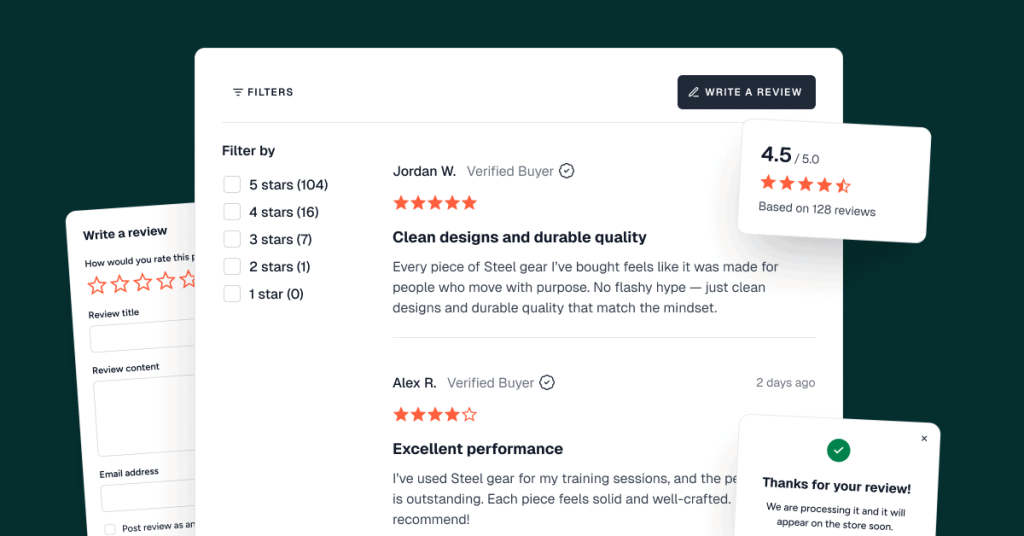
| Product reviews | Built in | Third-party app | Judge.me offers a free plan and a $15/month paid plan |
| Affiliate management | Built in | Shopify Collabs is free to install | A 2.9% commission-processing fee on automatic payments may apply |
| Dynamic or tiered pricing | Built in | Depends on the requirement | Often an app, Shopify Functions implementation, or higher-complexity setup |
| Customer self-service | Built in | Shopify customer accounts plus relevant apps | Advanced subscription or membership behavior depends on the app |
This produces two very different Shopify stores.
A Lean Shopify Store
A merchant could use:
- Shopify Basic: $348/year
- Shopify Subscriptions: free
- Shopify Digital Products: free
- Shopify Bundles: free
- A free review app plan
That store may operate close to the published Shopify plan price.
A Specialized Shopify Store
A merchant that needs:
- Advanced subscription recovery
- Software licensing
- Checkout order bumps
- Post-purchase upsells
- Advanced review automation
- Affiliate automation
- Specialist shipping or fulfillment
can accumulate several monthly subscriptions, usage charges, or revenue-based fees.
Shopify’s large app ecosystem is both an advantage and a cost surface. It lets you add specialized workflows SureCart may not support. It also means the real price depends on the exact stack you install.
Other Costs That Do Not Appear in the Headline Price
| Cost area | SureCart | Shopify |
| Domain | Separate | Separate |
| Hosting | Separate | Included |
| Premium theme | Optional WordPress theme or builder cost | Optional premium Shopify theme |
| Development | WordPress, PHP, blocks, builders, APIs | Liquid, themes, apps, APIs |
| Payment processing | External processor fee | Shopify Payments or third-party provider fee |
| Apps and integrations | Fewer needed for SureCart’s core revenue features; external tools still possible | Free and paid app ecosystem; recurring and usage charges possible |
| Email marketing | Transactional commerce email included; campaigns generally need an email or CRM tool | Shopify Email has an included allowance; larger or advanced programs can add cost |
| Shipping labels | Shippo costs | Postage and label adjustments billed separately |
| Tax calculation | SureCart tax features help you stay compliant. | Shopify Tax can add usage fees after the applicable threshold |
| International currency conversion | Depends on processor, currency, and setup | Shopify currency-conversion fees can apply |
| POS | No native SureCart POS | Casual POS included; POS Pro is $89/month per location |
| Maintenance | WordPress site layer remains your responsibility | Shopify maintains the hosted platform; apps and custom theme work still require oversight |
Shopify Tax Can Become an Additional Usage Cost
Shopify’s current Tax pricing provides a free threshold, then charges a percentage on eligible transactions where tax is calculated.
For stores created on or after May 13, 2026, the documented lifetime threshold is $100,000 for the United States and rest of world, with corresponding £100,000, €100,000, or CAD $100,000 thresholds for the UK, EU, and Canada. After the threshold, Basic, Grow, and Advanced stores are charged 0.35% for applicable US orders or 0.25% for applicable EU, UK, and Canadian orders, capped at $0.99 or the local equivalent per order.
Tax rules and Shopify’s pricing can change. Treat this as a line item to verify, not as tax advice.
International Selling Can Introduce More Fees
Shopify provides a strong international stack, but stronger automation does not mean every international service is free.
Shopify’s international pricing documentation lists currency-conversion fees of 1.5% for US stores and 2% for most other Shopify Payments regions when a non-domestic currency is converted. Managed Markets has its own transaction and currency-conversion fees.
SureCart supports multi-currency and global tax workflows, but availability depends on the payment processor, merchant country, currency, and store configuration. Shopify has the broader ready-made international retail system. SureCart gives WordPress merchants more control over the storefront and a different fee structure.
Do not compare international capability from a checkbox. Test the required countries, currencies, payment methods, taxes, duties, refunds, and payouts.
SureCart vs Shopify Beyond Pricing
Price is only useful if both platforms can run the store you need. If WooCommerce is also on your shortlist, our three-way breakdown in WooCommerce vs Shopify vs SureCart: Which Is Right for You? covers where each platform fits best.
| Question | SureCart | Shopify |
| What is it? | Managed ecommerce layer for WordPress | Fully hosted ecommerce platform |
| Do I need WordPress? | Yes | No |
| Is hosting included? | Commerce cloud is managed; WordPress hosting is separate | Yes |
| Fastest from a blank page | Fast with WordPress setup or a faster starter template setup | Usually Shopify |
| Best for an existing WordPress site | Best | Usually means running or integrating a separate platform |
| Digital products | Native | Free first-party app available |
| Software licensing | Native | Usually app or custom solution |
| Subscriptions | Native | Free first-party app; paid apps available for advanced needs |
| Physical products | Native | Strong, especially for physical-first retail |
| Shipping | Native | Native |
| Point of sale | No native POS | Major strength; POS Pro available |
| Multichannel and marketplaces | Integration-dependent | Major strength |
| Checkout and page design | Built through WordPress and supported builders | Theme editor; deeper checkout customization varies by plan and app |
| Content and SEO | WordPress publishing ecosystem | Solid commerce SEO and blogging, but less flexible than WordPress for complex content operations |
| App ecosystem | Smaller | Much larger |
| Common revenue features | Many included in SureCart | Mix of core features, free first-party apps, and paid apps |
| Infrastructure responsibility | You manage WordPress; SureCart manages commerce processing | Shopify manages the hosted platform |
| Native physical retail | Limited | Strong |
| Best operational profile | WordPress-led digital, subscription, service, software, and mixed-product businesses | Hosted physical retail, multichannel brands, and merchants prioritizing turnkey operations |
The Architecture Difference Matters
Shopify is fully hosted. The storefront, admin, checkout, hosting, and core commerce infrastructure live on Shopify.
SureCart is hybrid.
Your storefront and content live on WordPress. SureCart’s managed infrastructure handles much of the checkout, payment, order, and subscription work. That reduces the load placed on WordPress compared with a fully self-hosted commerce stack, but it does not remove WordPress ownership and maintenance.
The practical tradeoff is:
| If you value | Advantage |
| One vendor managing the complete website and commerce infrastructure | Shopify |
| Keeping the brand site and content operation in WordPress | SureCart |
| Complete freedom from WordPress maintenance | Shopify |
| WordPress builders, publishing tools, plugins, and SEO workflows | SureCart |
| A very large commerce app ecosystem | Shopify |
| Fewer add-ons for subscriptions and revenue optimization | SureCart |
Neither platform is fully self-hosted commerce. Shopify is a hosted SaaS platform. SureCart combines a WordPress storefront with a managed commerce service.
Where Shopify Is Worth the Higher Price
A fair comparison should make Shopify’s advantages explicit.
You Want the Fastest Route from Nothing to a Complete Store
Shopify packages hosting, infrastructure, store administration, checkout, themes, products, inventory, and payments into one onboarding path.
SureCart simplifies WordPress ecommerce, but a new SureCart user still needs WordPress, hosting, a theme, and decisions about site maintenance.
Physical Retail and POS Are Central
Shopify’s online and in-person systems are designed to work together. Casual in-person selling is included, and POS Pro adds retail staff, permissions, exchanges, and location tools for $89 per month per location.
SureCart does not have a native POS, and while its shipping tools now handle straightforward fulfillment well, they aren’t built for enterprise-scale, multi-warehouse inventory management or multi-location POS operations. If a physical counter, pop-up network, or complex multi-location retail workflow is central to the business, Shopify is the safer shortlist.
You Need Specialist Apps or Sales Channels
Shopify’s ecosystem covers fulfillment, marketplaces, dropshipping, wholesale, loyalty, returns, merchandising, customer service, and industry-specific workflows.
That breadth can cost more, but it can also solve requirements a smaller ecosystem cannot.
You Do Not Want to Operate WordPress
WordPress gives you control. It also gives you decisions: hosting, updates, security, backups, themes, and plugins.
If the business wants ecommerce without owning those decisions, Shopify’s recurring price is paying for a real operational benefit.
Where SureCart Offers Better Value
Your Website Already Runs on WordPress
This removes the biggest missing cost from SureCart’s advertised price: hosting.
Instead of operating a WordPress content site and a separate Shopify store, SureCart adds commerce to the website, design system, and publishing workflow you already use.
Subscriptions or Digital Products Are the Business Model
SureCart’s native feature set includes recurring prices, trials, setup fees, installment plans, digital delivery, software licensing, customer subscription management, failed-payment workflows, upgrades, downgrades, pauses, and cancellation tools.
Shopify can sell subscriptions and digital products, including through free first-party apps. The difference appears when the business needs more than basic recurring delivery or file access.
You Want Revenue Tools for Physical Products Without Assembling an App Stack
Order bumps, upsells, abandoned checkout recovery, dynamic pricing, subscriptions, product reviews, and an affiliate platform are part of SureCart.
On Shopify, some equivalents are built in or available through free apps. Others require third-party apps. SureCart’s advantage is not that Shopify cannot do them. It is that the merchant can manage more of them inside one commercial system and one pricing model.
You Prefer a Predictable Annual or Lifetime Software Cost
SureCart Pro removes the SureCart transaction fee, and the one-store lifetime plan gives established merchants an option Shopify does not offer.
External services and WordPress hosting still change the total, but the SureCart platform cost itself becomes predictable.
Physical and Fulfillment-Heavy Stores Have a Real Option Now
SureCart’s case for physical products got stronger with its Shippo-powered shipping and fulfillment system, which added live carrier rates at checkout, the ability to ship an order in full or in partial shipments from multiple saved warehouse or ship-from addresses, and label purchasing and tracking from inside the SureCart dashboard. That closes a real gap: a straightforward physical or mixed-catalog store no longer needs a separate shipping plugin bolted onto WordPress.
This doesn’t make SureCart an enterprise retail platform. Businesses running multiple point-of-sale locations, complex multi-warehouse inventory management, or high-volume omnichannel operations are still better served by Shopify, whose retail and inventory tooling is more mature at that scale. For a single-location or online-first physical store, though, SureCart’s shipping tools now cover most of what a merchant actually needs.
A Practical Decision Framework
Answer these questions before comparing totals.
| Question | If yes, lean toward |
| Is the website already on WordPress? | SureCart |
| Is the business primarily subscriptions, software, digital content, services, or memberships? | SureCart |
| Is native POS required? | Shopify |
| Does the merchant refuse to manage WordPress? | Shopify |
| Is Shopify Payments unavailable or unsuitable? | Cost both carefully: Shopify’s third-party-provider fee stacks on top of your processor’s own rate, while SureCart Pro adds no equivalent platform fee |
| Are marketplaces and social sales channels central to the business? | Shopify |
| Does the store need specialized apps? | Shopify |
| Are order bumps, licensing, affiliate management, and subscription retention core from day one? | SureCart |
| Is this a straightforward physical store with no existing website? | SureCart |
| Is this a content-led brand where the store must live inside a custom WordPress experience? | SureCart |
The Test to Run Before Choosing
Do not make this decision from two pricing pages.
Create one realistic test store on each platform.
- Add a simple product and a variable product.
- Configure the payment provider you will actually use in your country.
- Add the required subscription or digital-delivery workflow.
- Add one order bump or post-purchase offer.
- Configure domestic and international tax and shipping cases.
- Place a test order.
- Process a refund.
- Test a failed subscription payment.
- Fulfill a physical order if shipping matters.
- List every paid app, service, theme, and staff workflow the live store would need.
Then calculate:
Plan + hosting + processor fees + platform transaction fees + apps + usage fees + maintenance
That is the real price.
Conclusion
SureCart is not automatically cheaper because $199 is less than $348.
Shopify is not automatically better value because hosting is included.
For an existing WordPress website, SureCart Pro is usually the lower-cost and more cohesive option. Hosting is already covered, the annual platform price is lower, and subscriptions, licensing, order bumps, upsells, reviews, affiliate management, and other revenue tools do not require a separate Shopify-style app stack.
For a brand-new physical-product store, the base-cost difference may be negligible once WordPress hosting is included. Shopify’s fully hosted setup, mature POS, sales channels, app ecosystem, and retail operations can easily justify that difference.
The largest pricing gap appears when a Shopify merchant cannot use Shopify Payments. At $50,000 of eligible annual sales, Shopify Basic’s extra 2% third-party-provider fee is $1,000 before the gateway’s own processing charge. SureCart Pro does not add an equivalent platform transaction fee.
The clearest answer is:
- Choose SureCart when WordPress, subscriptions, digital and physical products, software licensing, services, content, or an included revenue toolset define the store.
- Choose Shopify when fully hosted operations, multi-retail chains, POS, multichannel distribution, and ecosystem depth define the store.